Source Duplex LC Fiber Optic Loopback for Testing, Maintenance, and Diagnostics
Explore 30 options for duplex lc fiber optic loopback adapters and cables. Compare specifications such as LC, SC, and FC connectors, single-mode and multi-mode types, and housing materials to find the right solution for your network testing and maintenance needs.
Key considerations
Products List




Comprehensive Sourcing Guide
Duplex LC Fiber Optic Loopback Sourcing Guide
Buyers evaluating duplex LC fiber optic loopback units must first distinguish between single-mode and multi-mode variants, as the supplied data indicates both types are available in the market. The core keyword specifically points to loopback models designed for testing transceiver functionality, where the connection structure is consistently identified as LC. Procurement teams should verify whether the specific unit required supports the double-core configuration often observed in these testing tools, ensuring the physical interface matches the network equipment being serviced.
The observed product listings reveal a diverse range of housing materials, including metal and plastic options, which directly impacts durability in harsh industrial environments. While some entries specify a beige housing color, others list blue, green, or black options, suggesting that aesthetic or color-coding requirements for rack organization are common decision factors. Buyers must confirm that the selected loopback unit's housing material aligns with the mechanical stress expectations of the deployment site, particularly regarding lateral pressure resistance which can vary between 100 and 1000 N/100mm depending on the specific model.
Product Scope and Observed Listing Signals
The market for duplex LC loopbacks includes distinct variations in cable diameter, with observed specifications ranging from 0.9mm to 3.0mm. This variance requires buyers to match the loopback cable thickness to the specific patch panel or adapter port constraints of their existing infrastructure. The presence of both PVC and LSZH sheath materials in the data suggests that environmental safety and fire-retardant properties are critical selection criteria, especially for indoor data center applications where smoke emission standards are strictly enforced.
Procurement signals also highlight the availability of customization services, allowing buyers to tailor boot colors such as blue, green, or aqua to their internal color-coding standards. The listed connector types extend beyond LC to include SC, ST, FC, and MPO, indicating that while the core focus is LC, the supply chain offers versatile adapter solutions. Buyers should verify if the specific loopback model supports the required ferrule endface type, such as APC, to ensure compatibility with high-performance optical networks that demand precise signal reflection management.
Technical Specifications to Verify
Technical verification must begin with the transmission medium, as the data confirms the existence of both multimode and single-mode fiber options. Selecting the wrong medium can lead to significant signal loss or complete testing failure, so buyers must explicitly confirm the fiber type matches their network architecture. The typical insertion loss is noted as less than 0.3dB, a critical performance metric that ensures the loopback unit does not introduce excessive attenuation during diagnostic procedures, preserving the integrity of the test results.
Buyers should also scrutinize the allowed tensile strength, which is observed to range between 100N and 1000N, to ensure the cable can withstand installation tension without damage. The fabrication process, whether injection molding for the housing or welding for the connector assembly, influences the long-term mechanical reliability of the component. Additionally, the shape of the component, observed as either rectangular or square in different listings, must align with the physical space constraints of the testing equipment or rack-mounted adapters being utilized.
Compliance and Safety Documentation
Compliance verification is paramount, with RoHS certification appearing as a consistent standard across the majority of listed products. This certification ensures that the materials used in the loopback, including the sheath and housing, are free from hazardous substances, which is a mandatory requirement for most international markets. Buyers must request current certification documents to confirm that the specific batch of products adheres to these environmental standards, as non-compliant units can lead to regulatory penalties and supply chain disruptions.
Beyond RoHS, the data indicates the presence of additional standards such as CE, ISO9001, UL, and REACH, which provide further assurance of quality and safety. The origin of these products is frequently listed as Guangdong, Shenzhen, or generally China, requiring buyers to assess the supplier's ability to provide valid documentation for these specific regional certifications. Ensuring that the product standard aligns with GR326, IEC, or other relevant industry norms is essential for maintaining network reliability and meeting the safety expectations of enterprise clients.
Cost Drivers and Commercial Terms
Cost structures for duplex LC loopbacks are influenced by the material composition, with metal housing options typically commanding a higher price point than plastic alternatives. The observed price range of 0.02 to 15 USD reflects the diversity in build quality and specification complexity, ranging from basic single-core units to more robust multi-core configurations. Buyers should analyze the total cost of ownership, considering that higher-priced units with LSZH sheathing and superior tensile strength may offer better longevity and reduced replacement frequency.
Commercial terms are heavily impacted by the Minimum Order Quantity (MOQ), which varies significantly from 1 unit to 10,000 units depending on the supplier. This wide range allows for flexibility, enabling small-scale testing purchases or large-scale infrastructure rollouts without excessive inventory costs. However, buyers must negotiate lead times and packaging details, as the standard carton packing may require customization for bulk orders, and the availability of OEM branding could affect the final unit cost and delivery schedule.
Supplier Qualification and Quality Control
Supplier qualification should focus on the manufacturer's ability to provide consistent quality control, evidenced by the presence of ISO9001 and UL certifications in the product data. Buyers must verify that the supplier has a documented process for testing insertion loss and tensile strength to ensure every unit meets the specified performance thresholds. The observation of various fabrication processes, such as injection molding and welding, suggests that suppliers with diverse manufacturing capabilities may offer better adaptability to specific buyer requirements.
Quality control also extends to the consistency of the connector endface and housing color, which are critical for visual identification and proper installation. Suppliers should be able to demonstrate traceability for their products, confirming that the origin is indeed Guangdong or Shenzhen and that the certifications are valid for the specific production batch. Buyers should request sample units to verify the physical attributes, such as the boot type being smooth or slotted, before committing to a larger order to mitigate the risk of receiving non-conforming goods.
Long-Term Procurement Checks
Long-term procurement success relies on establishing a relationship with suppliers who can maintain consistent supply of certified duplex LC loopbacks over time. Buyers should monitor the supplier's ability to adhere to changing standards like REACH or updated RoHS directives, ensuring that future orders remain compliant without requiring product redesigns. The availability of customization options, such as specific cable colors or housing shapes, should be confirmed as a permanent capability rather than a one-time offer to support evolving network management strategies.
Regular audits of the supplier's quality control processes are essential to prevent degradation in product performance, particularly regarding the allowed lateral pressure and tensile strength. Buyers must ensure that the packaging, typically described as carton or carton box, remains robust enough to protect the delicate fiber optic components during transit. By maintaining a clear record of the specific models, such as the LC Optical Fiber Adapter or Loopback variants, procurement teams can streamline future reordering and ensure seamless integration with existing network testing protocols.
FAQs
What is a duplex LC fiber optic loopback?
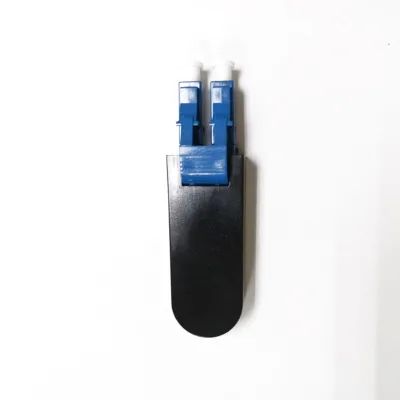
A duplex LC fiber optic loopback is a device used to test transceivers by connecting the transmit and receive ports. It typically features an LC connector and can be single-mode or multi-mode. The housing is often beige or blue, and the sheath material is PVC or LSZH. This tool helps verify optical performance without external network connections.
Can I customize the boot color for loopbacks?
Yes, customization is available for many loopback adapters. Buyers can select from boot colors such as blue, green, beige, aqua, black, white, or red. The housing material may be metal or plastic. This allows for easy identification in complex patch panels. Contact suppliers to confirm specific color availability and minimum order quantities for custom orders.
Which certifications are required for these adapters?
Common certifications include RoHS, ISO, CE, and CCC. Many products comply with GR326, IEC, and REACH standards. These ensure environmental safety and quality management. Verify specific certification documents with the supplier. Compliance is critical for international shipping and regulatory approval in various global markets. Always request valid certificates before placing bulk orders.
What is the typical insertion loss for loopbacks?
The typical insertion loss is less than 0.3dB. This low loss ensures accurate testing of optical transceivers. The connection structure is LC, providing stable coupling. Some models may have APC ferrule endfaces. This performance metric is vital for maintaining signal integrity during equipment diagnostics. Check specific product datasheets for exact loss values per unit.
Where are these fiber optic components manufactured?
These components are primarily manufactured in Guangdong, Shenzhen, China. The production origin is consistently listed as this region. Factories there specialize in fiber optic adapters and loopbacks. Buyers can source directly from these locations. Lead times and shipping options vary by supplier. Verify the exact factory address and production capacity during the sourcing process.
What cable diameters are supported by these adapters?
Supported cable diameters include 0.9mm, 1.6mm, 1.8mm, 2.0mm, 2.4mm, 2.8mm, and 3.0mm. This range accommodates various fiber types. The connection structure is LC, ensuring compatibility. Select the correct diameter for your specific fiber cable. Incorrect sizing may affect the fit. Confirm the exact diameter requirement with your technical team before ordering.